Toyo Drive Toyo Drive

How to Import Ride On Cars from China?

Time:2026-09-24 Author:Oliver
0%

Learning how to import ride-on cars from China requires more than finding a low factory price. It involves product research, supplier verification, safety planning, and careful shipment control. A reliable importer studies the vehicle’s age range, battery type, charging system, motor power, remote control, and maximum load. These details affect safety, customer expectations, shipping costs, and after-sales service. A bright sample may look excellent in photos, yet its plastic strength can feel different in person. Always request clear specifications, test reports, factory videos, and recent product images. Better still, inspect a sample before placing a large order.

The process also includes choosing suitable trade terms, confirming packaging dimensions, checking export documents, and calculating duties and delivery charges. Local product requirements must be reviewed before production begins. This may include labeling, electrical safety, battery transport rules, and children’s product standards. A professional supplier should communicate consistently and provide traceable business information. However, communication can still fail. One overlooked sentence about battery capacity may create expensive delays. I have found that written confirmation prevents many disputes, although it cannot remove every risk. Build a realistic budget with room for inspection, damaged cartons, port charges, and warranty replacements. Small details matter. This guide explains the practical steps behind a compliant and dependable importing process, helping buyers make informed decisions rather than chasing the cheapest quote.
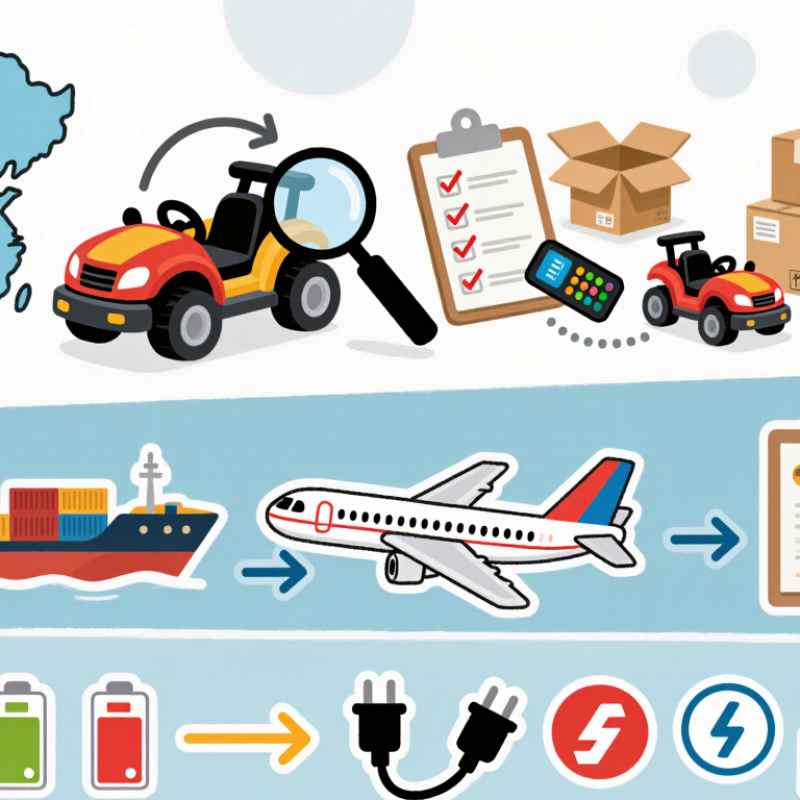
How to Import Ride On Cars from China?

What Are Ride-On Cars and Why Import Them from China?

Ride-on cars are child-sized vehicles powered by rechargeable batteries or foot pedals. They usually include low-speed motors, plastic bodies, simple steering, and parental controls. A child can sit inside, press a pedal, and move across a patio or indoor floor. Some models copy real driving details, such as headlights, horns, seat belts, and opening doors. Safety remains central. Small parts, battery access, braking distance, and charging protection require careful inspection.

Why import them from China? Manufacturing clusters offer access to molded plastics, motors, batteries, wiring, upholstery, and packaging within a connected supply network. This can reduce assembly costs and support customized colors, dimensions, and control systems. The Business Research Company has identified steady growth in the global ride-on toys market, with demand supported by electronic features and rising online retail. UN Comtrade data also shows China remains a major exporter of toys under HS 9503, the broader toy classification that includes many ride-on products.

The numbers look attractive, but they can mislead. A low factory quotation may exclude tooling, testing, inland transport, spare parts, and inspection. I have found that sample quality often differs from mass production unless specifications are written clearly. Importers should request battery test records, material declarations, user-age limits, and production samples. Independent inspections can check wheel strength, charger labeling, speed control, and carton damage. Local electrical and toy-safety requirements still apply. A cheaper vehicle is not always a cheaper import.

How to Choose a Reliable Chinese Ride-On Car Supplier

How to Choose a Reliable Chinese Ride-On Car Supplier

A reliable supplier should answer practical questions clearly, not just send polished photos. Ask about factory experience, production capacity, and the materials used for the body, wheels, and battery. Request recent product images or a live video showing assembly and quality checks. Details matter: a loose connector or uneven wheel can cause trouble after shipping. I have learned that a confident sales reply is not the same as proof.

Tips: Request a sample before placing a large order. Check its finish, controls, packaging, and user instructions. Ask for written specifications, inspection records, warranty terms, and a clear production schedule. Confirm who handles export documents and how shipping updates will be shared. Keep all agreed details in writing.

Communication is another useful test. Send a short list of questions and notice whether answers are specific, consistent, and timely. Ask how the supplier handles defects and replacement parts; vague promises deserve follow-up. A third-party inspection before shipment can provide extra confidence, especially when you cannot visit the factory. Still, inspections have limits, and no supplier can promise that every unit will be perfect. Compare more than price. A slightly lower quote may exclude packaging, testing, or support, so check the full offer before deciding.

How to Verify Product Quality, Safety, and Certifications

How to Import Ride On Cars from China?

How to Verify Product Quality, Safety, and Certifications

Before placing an order, request the exact model’s test reports and certification documents. Check that the model number, factory name, and production date match across every record. A certificate for a similar-looking vehicle may not cover the one you plan to import. Small details matter.

Ask for a sample from the same production line used for bulk orders. Inspect the seat, steering wheel, battery compartment, and moving parts. Look for sharp edges, loose screws, exposed wiring, or plastic that cracks under light pressure. Test the brakes and parental controls, too. They should respond consistently, not just during a polished demonstration. Take dated photos and record any defects before approving production.

Use an independent inspection before shipment, with checks based on your destination market’s current requirements. Confirm age grading, warning labels, battery specifications, and packaging instructions with a qualified testing body or local compliance professional. Documents alone are not enough. I would also ask the supplier how failed units are isolated and corrected, then request evidence from a recent production batch. Even a careful inspection has limits; it cannot predict every problem after months of use. That uncertainty deserves a clear plan, not a vague promise.

How to Manage Pricing, Orders, and International Shipping

How to Import Ride On Cars from China

Importing ride-on cars successfully depends on controlling the full landed cost, not just the factory price. Request a detailed quotation covering the vehicle, battery, charger, packaging, inland transport, export documents, and shipping. Then add freight, insurance, customs duties, taxes, inspection fees, and warehouse delivery. My early estimates were too optimistic because I ignored port handling charges. That mistake reduced my margin quickly.

Confirm every order detail in writing. Include vehicle dimensions, colors, battery specifications, charger type, carton measurements, quantities, and production dates. Ask for a sample before placing a large order. A pre-shipment inspection can check assembly, remote controls, charging performance, and packaging damage. Keep payment milestones clear. For example, link the final payment to inspection approval, not only production completion. Small details matter.

Tips: Compare at least three shipping quotations, but check what each quotation excludes. Choose sea freight for larger orders and air freight only for urgent, lightweight shipments. Confirm the correct shipping terms and destination responsibilities before signing. Ask whether the battery requires special transport documents. Also verify import rules, product safety requirements, labeling, and customs paperwork in your market. Delivery dates are estimates, not promises. Build extra time for factory delays, port congestion, and customs review. Keep one written record for every change.

How to Handle Customs Clearance, Delivery, and After-Sales Service

Importing ride-on cars from China requires more than comparing factory prices. Customs clearance can decide whether the shipment moves smoothly or waits at the port.

Before ordering, confirm the correct HS classification with a licensed customs broker. Prepare the commercial invoice, packing list, bill of lading, and product specifications. Battery details may require extra documents, especially for rechargeable models. Check the destination country’s safety, labeling, and electrical requirements before production. A small document error can create storage charges. My early mistake was trusting the supplier’s paperwork without checking local rules. That delay was avoidable.

Tips: Ask for a pre-shipment document pack. Confirm duties, taxes, port fees, and delivery terms in writing. Keep product photos and serial numbers for inspection records.

Delivery planning should include inland transport, port handling, and final-mile service. Use strong packaging around wheels, controllers, and plastic panels. Request loading photos before the container leaves. A delivery schedule is only an estimate, not a promise. Weather, customs inspections, and port congestion can change it quickly.

After-sales service should be agreed before payment. Request a parts list, wiring diagram, troubleshooting guide, and clear warranty period. Keep common items available, such as chargers, remote controls, wheels, and switches. Ask how technical support will respond to video evidence. A simple damage report should include the order number, photos, and a short description. Some suppliers offer fast replies but slow solutions. Test that process before placing a larger order.

How to Import Ride-On Cars from China?

Typical planning time by import stage, including customs clearance, delivery, and after-sales service.

The ranges are practical freight-planning benchmarks in working days. Actual timing depends on the destination country, product documents, battery classification, port congestion, inspection requirements, shipping method, and spare-parts availability.

FAQS

What are ride-on cars?

Ride-on cars are small vehicles powered by rechargeable batteries or foot pedals. Children steer them across safe indoor floors or patios. They often include pedals, low-speed motors, headlights, horns, and parental controls. Safety needs attention.

Why do some buyers import ride-on cars from China?

Connected manufacturing networks can provide plastics, motors, batteries, wiring, upholstery, and packaging. Buyers may request custom colors, sizes, and control systems. Lower factory prices can look attractive. They do not always reduce total costs.

What should be included in the true import cost?

Include the vehicle, battery, charger, packaging, inland transport, documents, freight, insurance, duties, taxes, inspection, and delivery. Port handling charges can surprise new importers. My early estimate was too optimistic. The margin disappeared quickly.

What details should buyers confirm before ordering?

Write down dimensions, colors, battery capacity, charger type, carton size, quantities, and production dates. Request a sample before ordering many units. Keep every change in writing. Details matter.

How can buyers check product quality?

Ask for battery records, material declarations, age limits, and production samples. An independent inspection can test wheels, brakes, speed control, charging, and remote controls. Inspect carton damage too. A sample may not match mass production.

Which shipping method is suitable?

Sea freight usually suits larger orders. Air freight may suit urgent, lightweight shipments. Compare at least three quotations and check exclusions. Confirm destination responsibilities and shipping terms before signing. Delivery dates remain estimates.

What documents help with customs clearance?

Prepare the commercial invoice, packing list, transport document, and product specifications. Confirm the correct classification with a licensed customs broker. Rechargeable batteries may need additional documents. One paperwork error can create storage charges.

How should after-sales support be arranged?

Request a parts list, wiring diagram, troubleshooting guide, and clear warranty period. Keep chargers, wheels, switches, and remote controls available. Test the support process before a larger order. Fast replies are not always fast solutions.

Conclusion

Learning how to import ride-on cars from China begins with understanding the product categories, target customers, and reasons for sourcing from Chinese manufacturers, such as product variety, customization options, and competitive production costs. Importers should carefully evaluate potential suppliers by reviewing their experience, factory capabilities, communication, production capacity, and references. Before placing an order, request product samples and verify materials, battery performance, durability, safety features, and relevant certifications for the destination market.

A successful import process also requires clear pricing, minimum order quantities, payment terms, packaging requirements, and production schedules. Buyers should compare suitable shipping methods, calculate freight and insurance costs, and prepare accurate commercial documents. Customs clearance depends on correct product descriptions, tariff information, invoices, and compliance with local import rules. After delivery, a reliable supplier should provide installation guidance, spare parts, warranty support, and responsive communication. Careful planning at every stage can help reduce risks, control costs, and build a stable long-term supply relationship.

Oliver

Oliver

Oliver is a seasoned marketing professional with a wealth of expertise in driving brand awareness and engagement. With a deep understanding of our company's product offerings, he consistently delivers high-quality content that enriches our professional blog. His insights not only shed light on......