Toyo Drive Toyo Drive

Top Guide How to Customize Ride On Cars for Your Brand?

Time:2026-10-09 Author:Sophia
0%

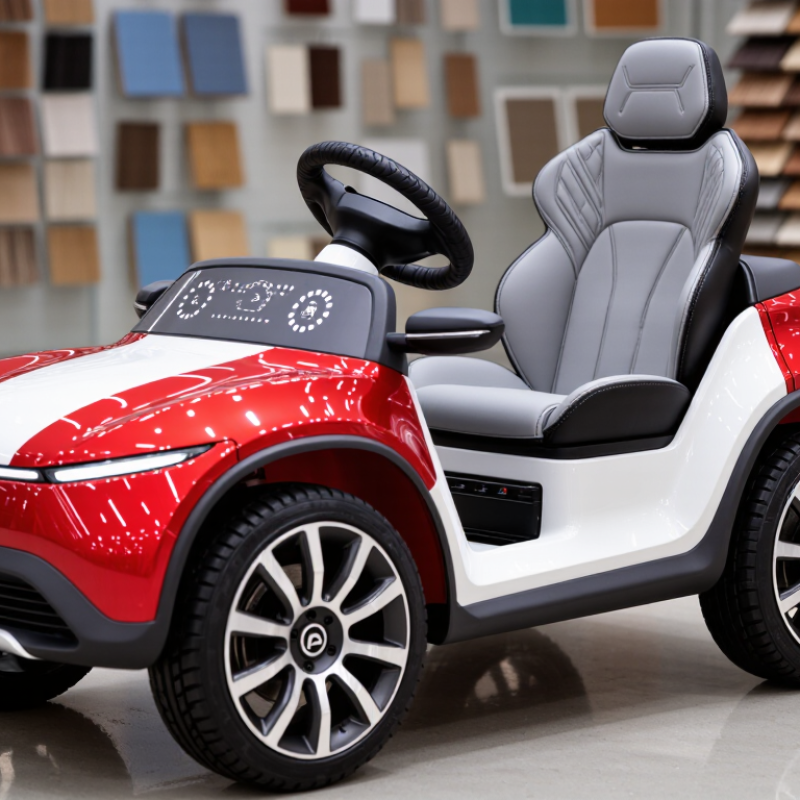
Building a branded ride-on car is more than placing a logo on a plastic dashboard. It requires practical experience, careful product planning, and close cooperation with a capable manufacturer. If you are researching how to customize ride-on cars for your brand, begin with the child’s experience. Consider the vehicle’s size, steering response, seat comfort, battery access, sound effects, and driving environment. Small details matter. A textured steering wheel can improve grip. A softly lit dashboard can make the product feel more memorable.

Toy-industry expert Reyne Rice has said, “A successful toy must combine play value, safety, and a clear reason to exist.” This principle suits branded ride-on cars well. Your design should express the brand without making the vehicle visually crowded. A simple color palette, molded emblem, custom seat stitching, and matching packaging may create stronger recognition than excessive graphics. The manufacturer should also provide material records, battery specifications, sample testing, and quality-control reports. Ask for photographs of production details, not only polished catalog images.

A first prototype may look impressive and still feel wrong. The steering may be too stiff. The battery compartment may be difficult to reach. These weaknesses deserve honest review before mass production. Test the car with children only through appropriate, supervised product-evaluation procedures. Check stability, charging performance, surface durability, and assembly consistency. Do not assume one successful sample represents an entire shipment. A reliable customization plan connects brand identity with safe construction, repeatable quality, and realistic production costs. That balance is the real starting point.
Top Guide How to Customize Ride On Cars for Your Brand?

Map Product Specs: 12V/24V Power, 3–8 Age Bands, and Load Ratings

Customizing ride-on cars for a brand starts with mapping product specifications, not adding colors or logos. A 12V system suits lighter vehicles, shorter routes, and younger riders. A 24V system delivers stronger torque and climbing ability, but it needs tighter speed control and thermal testing. The battery label alone is not enough. Check motor output, charging time, controller limits, and braking response together.

Age bands from three to eight require careful separation. A three-year-old needs simple controls, slow acceleration, and close adult supervision. Older children may expect dual-speed modes, remote override, and longer play time.

Load ratings must include the child, clothing, and small accessories. A practical test should use the stated maximum load, uneven flooring, and repeated starts. Real use is messier.

Safety evidence should guide customization. The U.S. Consumer Product Safety Commission reported an estimated 231,000 toy-related emergency-department injuries involving children under 15 in 2023. Its Toy-Related Deaths and Injuries report supports stronger attention to stability, supervision, and misuse scenarios. ASTM F963-23 and EN 71 provide useful testing references, though market requirements differ. Do not print a generous load number without endurance data. That shortcut looks professional, but it can fail. I would also retest after changing wheels, seats, or battery placement, because small design changes can alter balance.

Set Safety Targets with ASTM F963-23, EN 71, CPSC, and UN 38.3

Top Guide: How to Customize Ride On Cars for Your Brand?

Set safety targets before changing colors, seats, controls, or battery packs. ASTM F963-23 provides a core U.S. toy-safety framework for ride-on designs. It covers mechanical hazards, flammability, toxic elements, and labeling. EN 71 supports similar risk checks for products entering European markets. These standards should guide prototypes, not decorate finished paperwork.

CPSC’s 2023 Toy-Related Deaths and Injuries report recorded about 231,900 emergency-department-treated injuries involving children under 15. Ride-on vehicles deserve careful attention because speed, weight, pinch points, and small detachable parts interact. Set measurable limits for motor speed, braking distance, wheel stability, seat retention, and accessible battery covers. Test a rough prototype. It may reveal sharp edges or weak fasteners earlier than expected.

For lithium-powered models, UN 38.3 testing addresses transport safety for cells and batteries. Keep test records linked to each battery configuration, charger, and enclosure. Do not assume one successful sample represents every customized version. EN 71 testing may also require material and chemical checks after paint, upholstery, or plastic changes. A common mistake is testing only the final appearance. Safety can change inside the vehicle. CPSC guidance, ASTM documentation, and accredited laboratory reports should support every target. Some teams still overlook misuse testing. Children rarely follow the manual.

Top Guide How to Customize Ride On Cars for Your Brand? - Set Safety Targets with ASTM F963-23, EN 71, CPSC, and UN 38.3

Safety Dimension Reference Standard or Rule Primary Scope Practical Target for a Customized Ride-On Car Typical Evidence and Verification Applicability and Status
Mechanical and Physical Safety ASTM F963-23
16 CFR Part 1250 in the United States
Toy hazards such as accessible points and edges, small parts, sharp points, sharp edges, stability, structural integrity, and related mechanical risks. Prevent hazardous accessible sharp points and edges; control detachable components that may create small-part hazards; verify that the vehicle remains stable during foreseeable use. Design review, dimensional checks, small-parts assessment, sharp-point and sharp-edge testing, stability evaluation, structural testing, and production-sample inspection. U.S. mandatory framework
ASTM F963 is incorporated into the U.S. toy safety regulatory framework through 16 CFR Part 1250.
Flammability ASTM F963-23
16 CFR Part 1500.44, where applicable
Flammability risks associated with toy materials and accessible components. Use materials and constructions that satisfy the applicable flammability limits for the intended product category and configuration. Material identification, laboratory flammability testing, supplier declarations, and change-control records for plastics, textiles, foam, and coatings. Market-dependent compliance
Requirements depend on the product construction and destination market.
Heavy Elements and Restricted Substances ASTM F963-23
16 CFR Part 1250
Limits and test methods for certain soluble elements in accessible toy materials and surface coatings. Control restricted substances in paints, coatings, plastics, metal parts, printed graphics, and other accessible materials through approved material specifications. Third-party chemical testing, supplier material declarations, bills of materials, coating specifications, and batch traceability. U.S. mandatory framework
Testing should cover each material or finish that could affect compliance.
Battery Compartment and Electrical Access ASTM F963-23
16 CFR Part 1250
Battery accessibility and hazards associated with battery compartments in toys. Prevent unintended access to batteries during reasonably foreseeable use; secure the compartment and avoid designs that permit loose batteries to become accessible. Fastener and latch review, accessibility assessment, abuse testing, battery-retention checks, and inspection of final production units. U.S. mandatory framework
Requirements vary according to battery type, location, and accessibility.
Electric Ride-On Function and Charging Safety Applicable electrical and toy-safety requirements in the destination market Risk control for motors, wiring, switches, chargers, connectors, overheating, overcurrent, and unintended movement. Include overcurrent protection, secure wiring, protected connectors, charging controls, insulation appropriate to the system voltage, and a design that prevents unintended acceleration. Electrical safety evaluation, abnormal-operation testing, charger compatibility checks, thermal measurements, wiring inspection, and software or control-function validation where applicable. Design control target
The applicable legal requirements depend on the sales region and product architecture.
European Mechanical and Physical Safety EN 71-1 Mechanical and physical properties of toys placed on the European market. Address stability, structural integrity, accessible hazards, entrapment risks, sharp points and edges, and foreseeable misuse according to the product’s age grading. EN 71-1 laboratory testing, risk assessment, technical documentation, age-grade justification, and production consistency checks. EU toy-safety framework
EN 71-1 is one part of the broader European toy-safety compliance route.
European Flammability Safety EN 71-2 Flammability behavior of specified toy materials and components. Identify all textile, foam, hair-like, film, and other materials covered by the standard, then select materials and constructions that meet the applicable flammability requirements. Material mapping, laboratory flammability tests, supplier certificates, construction review, and change-control documentation. EU toy-safety framework
Applicability depends on the material and construction of the ride-on car.
European Chemical Migration EN 71-3 Migration of certain elements from accessible toy materials. Screen accessible coatings, plastics, metals, rubber, textiles, paper, and other relevant materials for restricted-element migration. Representative material sampling, accredited laboratory reports, supplier declarations, and a bill-of-materials compliance matrix. EU toy-safety framework
Use the current harmonized or otherwise applicable version for the destination market.
U.S. Product Certification 16 CFR Part 1110
Children’s Product Certificate requirements
Certification of children’s products subject to CPSC-enforced safety rules. Maintain a certificate identifying the product, applicable regulations, manufacturer or importer information, testing location, and testing date. Third-party testing by a CPSC-accepted laboratory, Children’s Product Certificate, test reports, and records supporting production controls. U.S. mandatory requirement
Applicable children’s products generally require testing and certification before distribution in the United States.
Tracking and Traceability 16 CFR Part 1110 and applicable CPSC tracking-label requirements Traceability of children’s products and their packaging through production and distribution. Place durable identifying information on the product and packaging where required, including information such as manufacturer or private-labeler identity, production location and date, and batch or run information. Label artwork approval, production-code verification, packaging inspection, and retained samples linked to manufacturing records. U.S. mandatory requirement
Exact label content and placement should be confirmed for the final product.
Lithium Battery Transport UN Manual of Tests and Criteria, Part III, Sub-section 38.3
UN 38.3
Transport safety testing for lithium-ion and lithium-metal cells and batteries. Use a battery pack with documented UN 38.3 test evidence, correct cell and pack identification, appropriate protection against short circuit, and transport packaging suited to the shipment configuration. UN 38.3 test summary, battery specifications, cell configuration records, protection-circuit information, packaging review, and shipping documentation. Transport requirement
UN 38.3 is not a general toy-safety certification; it concerns transport of applicable lithium cells and batteries.
Battery Abuse and Thermal Risk Battery manufacturer specifications and applicable destination-market requirements Risks from overcharge, short circuit, impact, overheating, incorrect charging, and damaged battery packs. Specify a compatible charger and battery protection system; prevent reverse connection, overcurrent, and foreseeable misuse; separate the battery from heat-sensitive materials where needed. Battery qualification, charger matching, protection-circuit verification, thermal testing, abuse testing where required, and supplier change notification. Engineering safety target
Additional requirements may apply depending on battery chemistry, voltage, charger, and market.
Age Grading and User Instructions ASTM F963-23, EN 71-1, and applicable consumer-product labeling rules Communication of intended age, operating limits, supervision needs, charging instructions, warnings, and foreseeable misuse. Match the recommended age and user capability to speed, weight limit, seating configuration, controls, terrain, and supervision requirements. Age-grade rationale, warning review, instruction-manual verification, label durability checks, and translation review for each destination market. Market-dependent requirement
Warnings must be clear, conspicuous, durable, and consistent with the tested configuration.
Customization Change Control Internal compliance and production-control procedure Evaluation of safety impact when changing colors, coatings, graphics, materials, battery packs, chargers, motors, seats, wheels, software, or packaging. Require a documented compliance review before any change that can affect accessible materials, structural strength, electrical behavior, battery performance, age grading, or labeling. Engineering change order, updated bill of materials, risk assessment, delta-testing decision, revised reports, and approved golden sample. Recommended control
Retesting may be necessary when a change can affect a regulated characteristic.

Compliance scope depends on the final design, age grading, battery system, materials, sales region, and shipment method. Confirm the current legal requirements and applicable standard editions with an accredited testing laboratory before production or market launch.

Customize Core Hardware: Motors, Speed Limits, Batteries, and IP Codes

Customizing ride-on cars starts with matching hardware to the child’s environment, not just changing colors. A 12V motor suits gentle indoor driving, while dual motors improve traction on grass. Motor torque matters more than advertised wattage. Test acceleration with a child-sized load, especially on slight slopes.

Speed limits need careful calibration. A soft-start controller reduces sudden movement and protects gears. Many family products stay near walking pace, but actual performance changes with battery charge and rider weight. The IEA Global EV Outlook 2024 reports that global electric vehicle battery demand exceeded 750 GWh in 2023. This wider trend reinforces one lesson: battery management deserves serious engineering. Use a protected lithium or sealed lead-acid pack, include a fuse, and verify charging temperature. My first test plan focused too much on top speed. That was a mistake.

Ingress protection should reflect real use. IEC 60529 defines IP ratings, where the first digit addresses solids and the second addresses water. IP54 can resist dust entry and splashing, but it does not support water immersion. Place the rating label near the charging port, then test doors, seals, and cable exits after repeated opening. Safety design should also reference ISO 8124 requirements for toy products and local testing rules. Published specifications from the International Energy Agency and IEC provide useful benchmarks, but they do not replace product testing. A wet garden path, cold battery, and impatient child can expose weaknesses quickly. Sometimes, the uncomfortable test is the most valuable one.

Build Brand Identity: Colors, Logos, Packaging, and Minimum Order Quantities

Top Guide: How to Customize Ride-On Cars for Your Brand?

Customizing ride-on cars begins with a clear visual system, not random decoration. In my production experience, color choices affect recognition from several meters away. Use one main color, one supporting shade, and a small accent. Matte finishes hide fingerprints, while gloss surfaces photograph better. Test samples under showroom lights and outdoor sun. Color matching can still drift slightly. That small difference deserves attention.

A logo should remain readable on the steering wheel, door panel, and shipping carton. Prepare vector artwork with defined spacing and approved color codes. Embossed badges feel premium, but printed decals reduce tooling costs for early runs. I recommend checking adhesion after heat, moisture, and repeated cleaning. Packaging also carries brand identity. Strong cartons, molded protection, and clear assembly instructions reduce damage and customer frustration. Do not overprint the box. Excessive graphics can make recycling instructions difficult to find.

Minimum order quantities influence every customization decision. A supplier may accept low quantities for decals, but custom molds usually require a larger commitment. Ask for separate prices for samples, tooling, packaging, and replacement parts. Confirm lead times in writing, including artwork approval and inspection. One overlooked detail is spare packaging for damaged deliveries. It costs more upfront, yet it can protect the customer experience. I once underestimated carton storage space. The design was right, but operations became awkward. Review the full landed cost before approving production.

Validate Production: Drop Tests, Battery Checks, and 1,000-Unit QA Plans

Customizing a ride-on car for your brand requires more than colors, logos, and molded panels. Production validation protects the customer experience. Prototype testing should begin before large-scale assembly. Record each sample’s model number, battery condition, weight, and test date.

A controlled drop test can reveal weak bumpers, loose wiring, or cracked mounting points. Use a fixed height and a hard, level surface. Repeat the test from several angles. Inspect steering, wheels, body seams, and battery covers afterward. Small details matter. Early samples may pass one drop but fail after repeated impacts. That result deserves investigation, not excuses.

Battery checks need the same discipline. Measure charging time, operating voltage, connector temperature, and run time under realistic loads. Test fully charged and partially charged units. Do not trust a single reading. Test every revision. We once found a loose connector only after vibration testing, which showed that visual inspection was insufficient.

For a 1,000-unit production run, divide output into traceable lots. Inspect incoming parts, approve the first assembled units, and perform functional checks on every finished car. Sample additional units for drop, charging, wheel alignment, and remote-control response. Keep photos, measurements, defect codes, and corrective actions in one quality record. A rushed approval may protect the schedule, but it can weaken trust. QA plans must leave room to stop, review, and improve.

FAQS

How should a ride-on car’s power system match its intended use?

A 12V system suits lighter vehicles, shorter routes, and younger riders. A 24V power system offers stronger climbing ability and torque. It also needs stricter speed control and heat testing. Battery labels alone can mislead.

What controls are suitable for children aged three to eight?

Younger children need slow acceleration, simple controls, and close adult supervision. Older children may use dual-speed modes, remote override, and longer play periods. Age grouping should reflect real ability, not only birth year.

How should the maximum load be calculated?

Include the child, clothing, shoes, and small accessories. Test the stated maximum load on uneven flooring with repeated starts. Real use is messier. A generous number without endurance evidence deserves review.

What safety features should be checked before customization?

Check braking distance, wheel stability, seat retention, motor speed, and battery-cover access. Inspect pinch points, sharp edges, loose fasteners, and detachable parts. Small changes can alter balance.

Should safety testing be repeated after design changes?

Yes. Retest after changing wheels, seats, battery placement, paint, upholstery, or plastic parts. These changes may affect stability, materials, heat, or chemical performance. One successful sample is not enough.

What battery checks are useful during product validation?

Measure charging time, operating voltage, connector temperature, and runtime under realistic loads. Test fully charged and partially charged batteries. Do not trust one reading. A loose connector may appear only during vibration testing.

What can a controlled drop test reveal?

A fixed-height drop test can expose weak bumpers, cracked mounts, loose wiring, or damaged battery covers. Repeat drops from several angles on a hard, level surface. Inspect steering, wheels, seams, and fasteners afterward.

How can a 1,000-unit production run be checked effectively?

Divide the production into traceable lots and inspect incoming parts. Approve early assembled units before wider assembly continues. Check every finished car’s basic functions. Sample additional units for charging, wheel alignment, drop resistance, and remote response. Leave room to stop and rethink.

Conclusion

This guide explains how to customize ride-on cars for your brand by starting with a clear product specification plan. Define whether each model will use 12V or 24V power, identify suitable age groups from 3 to 8 years, and set realistic load ratings based on intended use. Safety should be built into the design from the beginning, with targets aligned to recognized requirements such as ASTM F963-23, EN 71, CPSC guidance, and UN 38.3 battery transport testing.

Next, customize the core hardware, including motor performance, speed limits, battery capacity, charging systems, and suitable IP protection. Develop a consistent brand identity through color choices, logos, packaging, and practical minimum order quantities. Before launch, validate production with drop tests, battery inspections, functional checks, and a structured quality assurance plan covering every batch, including larger 1,000-unit production runs. This process helps create safe, reliable, and visually consistent ride-on cars.

Sophia

Sophia

Sophia is a dedicated marketing professional with an exceptional depth of knowledge about her company's products and services. With a keen understanding of market trends and customer needs, she crafts insightful blog posts that not only inform but also engage readers, enriching the company’s online......